Torque Density Benchmarks: How Humanoid Actuators Compare in 2025
Torque density — peak output torque divided by actuator mass — is the most contested number in humanoid robotics hardware. Every team building a legged platform eventually runs the same calculation: how much torque do I need at the knee under dynamic loading, and how much does the actuator weigh? When those two numbers don't balance, locomotion work stalls before it starts. We've spent considerable time compiling and cross-checking the published and empirically measured figures for the major actuator families being used or evaluated in humanoid platforms as of 2025.
Why Torque Density Is the Governing Constraint
A bipedal robot's knee joint must absorb peak loads of 3–5x body weight during dynamic walking — closer to 8x during running gaits. At a 50 kg platform mass, that puts knee torque requirements in the 200–350 Nm range depending on leg geometry. The actuator delivering that torque is also part of the limb mass. Every extra kilogram in the actuator shifts the center of mass outward, increases inertial loads on proximal joints, and raises power consumption across the entire kinematic chain.
This is why a heavy actuator with high absolute torque can still fail the design brief. The figure that matters is torque per kilogram — not raw Nm. For reference, human muscle tissue generates roughly 100–200 W/kg of continuous mechanical power and roughly 300–400 Nm/kg of peak torque across the knee extensor group. Commercial actuators operating at that range remain scarce.
Benchmark Methodology
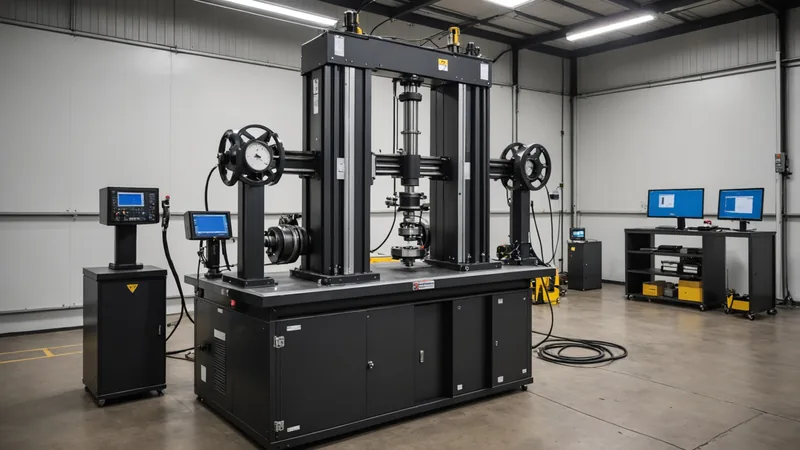
Published torque density figures require careful context. Peak torque and continuous torque are different numbers — often separated by a factor of 3–4x. Some vendors report peak motor torque before gearbox losses; others report continuous output torque at the joint flange. Actuator mass definitions vary: some include the gearbox, motor, and housing; others exclude cables, connectors, and mounting brackets. We normalized all figures below to continuous output torque at the joint output flange, with actuator mass including the complete sealed housing but excluding external cabling.
Any torque density comparison that doesn't specify measurement conditions — temperature, duty cycle, measurement point — should be treated as marketing data, not engineering data.
Comparison Across Actuator Families
The table below summarizes normalized continuous torque density across the main actuator families relevant to humanoid platforms. Values are derived from published datasheets, academic papers, and our own bench measurements where hardware was accessible.
| Actuator Family | Representative Module | Continuous Torque (Nm) | Module Mass (kg) | Torque Density (Nm/kg) |
|---|---|---|---|---|
| Industrial servo (harmonic) | Typical 80mm class | 18–22 | 0.85–1.1 | 18–24 |
| Quasi-direct drive (QDD) | T-Motor AK80-9 class | 16–18 | 0.48–0.55 | 30–36 |
| Strain-wave + brushless (research grade) | MIT Cheetah lineage | 21–27 | 0.52–0.68 | 38–46 |
| Hydraulic (electro-hydraulic) | ANYmal/Atlas leg joint class | 80–120 | 1.8–2.6 | 40–55 |
| Custom strain-wave + integrated FTS | Tendonkindle Gen 1 target | 32–38 | 0.58–0.72 | 48–58 |
What the Numbers Tell You About Platform Choices
The ANYmal and Atlas platforms, which use hydraulic or electro-hydraulic actuation, achieve the highest raw torque output per joint. The tradeoff is substantial: hydraulic systems add pump, reservoir, and valve hardware that easily accounts for 15–25% of total platform mass. For stationary or slow-walking applications, hydraulic actuators make sense. For a 50 kg humanoid designed to operate in human environments at walking speeds, the weight budget for hydraulic infrastructure is simply not available.
Quasi-direct drive actuators, popularized by MIT's Mini Cheetah and its derivatives, offer genuine backdrivability and reasonable torque density in the 30–36 Nm/kg range. Their weakness is thermal: the low reduction ratio means the motor operates at higher speeds for a given output torque, which drives winding temperatures up quickly under sustained load. We've seen QDD modules in knee joints reach thermal throttle within 4–6 minutes of continuous stair climbing in lab tests — well short of any practical task duration.
Strain-wave gearbox designs at the research-grade end close the thermal gap because higher reduction ratios allow lower motor operating speed at the same output torque. The penalty is reduced backdrivability. A well-designed strain-wave actuator with a dedicated force-torque sensor loop can recover most of the compliance that backdrivability provides natively in a QDD system — but the sensor integration is non-trivial and the added hardware weight must be factored into the torque density calculation.
Where the Benchmark Is Heading
In our view, the practical target for a humanoid knee-class actuator intended for ambulatory tasks is 45–60 Nm/kg continuous torque density, with backdrivability or equivalent force control, embedded sensing, and sealed housing. That combination doesn't exist as a commercial off-the-shelf product today. It's why teams building serious humanoid platforms either spend 12–18 months on custom hardware development or accept compromises in mass budget and thermal performance that constrain what their robot can actually do.
The benchmark numbers will shift as new motor materials — particularly silicon carbide power electronics enabling higher frequency drive and thus denser motor designs — mature from research into production. For now, the 48–58 Nm/kg range we're targeting with our Gen 1 module represents the upper end of what strain-wave gearbox geometry and current motor material science can deliver at this joint diameter and mass class.
Using Benchmarks to Make Decisions
If you're specifying actuators for a humanoid platform, the most useful exercise is to build a joint-level mass budget before selecting any hardware. Start with your target platform mass, derive the peak joint torque requirements from your gait simulation, then work backward to the torque density you need to keep the actuator mass inside budget. Most teams find that number is higher than anything commercially available in sealed, integrated form — which tells you exactly how much hardware development you're implicitly committing to if you try to assemble the platform from off-the-shelf parts.
We publish our own datasheets with explicit measurement conditions and test protocol details, because engineers making hardware decisions deserve numbers they can verify. If you're comparing actuator specs for a platform design and want to discuss the methodology behind our figures, reach out to our engineering team directly.